

Can 35gsm Fast Dry Sublimation Paper be used for printing on plastic?
Jul 08, 2025
Can 35gsm Fast Dry Sublimation Paper be used for printing on plastic?
As a supplier of 35gsm Fast Dry Sublimation Paper, I often receive inquiries from customers about the compatibility of our product with various substrates, especially plastic. In this blog post, I will delve into the technical aspects and practical considerations to answer the question: Can 35gsm Fast Dry Sublimation Paper be used for printing on plastic?
Understanding Sublimation Printing
Before we discuss the suitability of 35gsm Fast Dry Sublimation Paper for plastic printing, it's essential to understand the basic principles of sublimation printing. Sublimation printing is a process where solid ink (sublimation dye) is heated to a gaseous state without passing through the liquid phase. This gas then bonds with the polymer molecules in the substrate, resulting in a permanent, high - resolution print.
The key requirements for successful sublimation printing are a substrate that can absorb the sublimated dye and a heat - transfer process that can reach the necessary temperature to convert the dye into a gas.
Characteristics of 35gsm Fast Dry Sublimation Paper
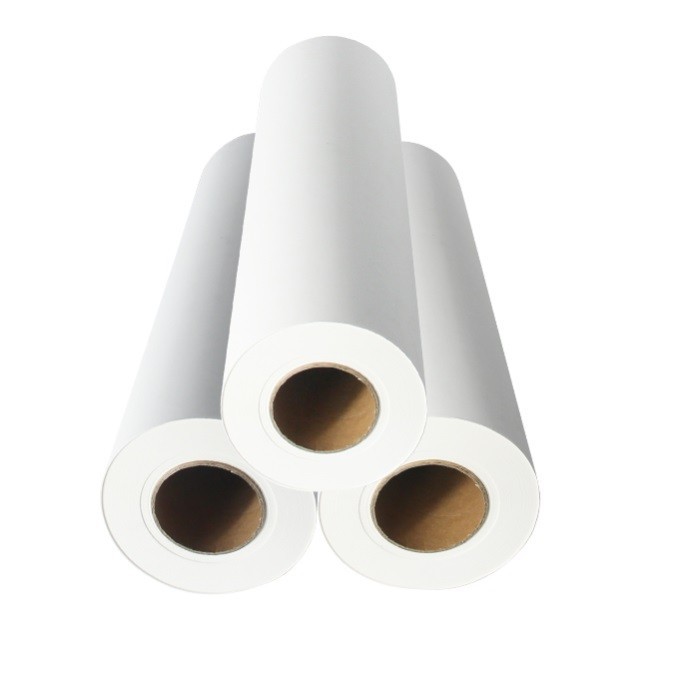
Our Fast Dry Sublimation Paper with a weight of 35gsm has several notable features. Firstly, the fast - drying property ensures that the ink dries quickly on the paper, reducing the risk of smudging during the handling process. This is particularly important when dealing with high - volume printing.
Secondly, the 35gsm weight makes the paper relatively thin. A thinner paper can conform better to irregular surfaces during the heat - transfer process, which might be an advantage when printing on some plastic items. However, it also means that the paper may hold less ink compared to thicker papers.
Types of Plastic and Their Suitability for Sublimation
Not all plastics are suitable for sublimation printing. The most common plastics used in sublimation are polyester and polycarbonate. These plastics have polymer structures that can absorb the sublimated dye and form a strong bond.
- Polyester: Polyester is an ideal plastic for sublimation printing. It has a high affinity for sublimation dyes, which results in vibrant and long - lasting prints. The 35gsm Fast Dry Sublimation Paper can work well with polyester plastics. The thinness of the paper allows for efficient heat transfer, ensuring that the dye is effectively transferred from the paper to the plastic surface.
- Polycarbonate: Polycarbonate is another plastic that can be used for sublimation. It has good heat resistance and can withstand the high temperatures required for the sublimation process. However, the surface of polycarbonate may need to be pre - treated to improve the dye absorption. The 35gsm paper can be used, but proper pre - treatment and calibration of the heat - transfer process are crucial.
On the other hand, plastics such as polyethylene and polypropylene are not suitable for sublimation printing. These plastics have a low melting point and do not have the necessary polymer structure to absorb the sublimated dye.
Advantages of Using 35gsm Fast Dry Sublimation Paper on Plastic
- Cost - effective: The 35gsm paper is generally more affordable than thicker papers such as the 100gsm Fast Dry Sublimation Paper. This can significantly reduce the printing cost, especially for large - scale production.
- Conformability: As mentioned earlier, the thinness of the 35gsm paper allows it to conform better to curved or irregular plastic surfaces. This is beneficial when printing on items such as plastic mugs, phone cases, or keychains.
- Fast - drying: The fast - drying feature of the paper ensures that the ink is quickly ready for the heat - transfer process. This can increase the overall production efficiency, especially in high - volume printing operations.
Challenges and Considerations
- Ink capacity: The 35gsm paper has a lower ink - holding capacity compared to thicker papers. This means that for prints with high ink coverage, the colors may not be as saturated as when using a thicker paper. To overcome this, it may be necessary to adjust the print settings or use a higher - quality ink.
- Heat - transfer process: The heat - transfer process needs to be carefully calibrated when using 35gsm paper on plastic. The thin paper may transfer heat more quickly, which can lead to over - heating of the plastic if the temperature and time settings are not correct. It is recommended to conduct test prints to determine the optimal heat - transfer parameters.
- Surface finish: The surface finish of the plastic can also affect the print quality. Rough or textured surfaces may not receive the dye evenly, resulting in a less - than - perfect print. In such cases, pre - treatment of the plastic surface may be required.
Case Studies
To illustrate the practical application of 35gsm Fast Dry Sublimation Paper on plastic, let's look at a few case studies.
- Plastic Phone Cases: A customer who manufactures plastic phone cases wanted to add custom - printed designs to their products. They used our 35gsm Fast Dry Sublimation Paper and were able to achieve high - quality prints on the polyester - coated phone cases. The thin paper conformed well to the curved surface of the phone cases, and the fast - drying feature allowed for efficient production.
- Plastic Name Tags: Another customer used the 35gsm paper to print on polycarbonate name tags. After pre - treating the polycarbonate surface, they were able to produce clear and durable prints. The cost - effectiveness of the 35gsm paper was a significant advantage for this high - volume production.
Conclusion
In conclusion, 35gsm Fast Dry Sublimation Paper can be used for printing on certain types of plastic, such as polyester and polycarbonate. It offers several advantages, including cost - effectiveness, conformability, and fast - drying properties. However, there are also challenges, such as limited ink capacity and the need for careful calibration of the heat - transfer process.
If you are considering using our FAST DRY SUBLIMATION PRINTER PAPER for plastic printing, I encourage you to contact us for more information. Our team of experts can provide you with detailed guidance on the printing process, including pre - treatment of the plastic, ink selection, and heat - transfer settings. We are committed to helping you achieve the best possible print quality for your plastic products. Whether you are a small - scale business or a large - scale manufacturer, we can work with you to meet your specific printing needs.

References
- Smith, J. (2020). Sublimation Printing: Principles and Applications. Printing Industry Journal, 35(2), 45 - 52.
- Johnson, A. (2021). Plastic Substrates for Sublimation Printing. Plastics Technology Review, 42(3), 67 - 73.